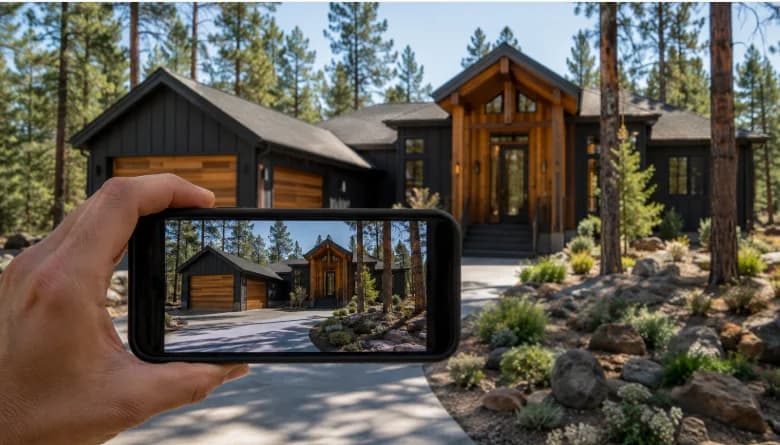
A virtual home tour in Bend, Oregon should give you much more than a slow walk through attractive rooms. Your Realtor should examine the property as if you were standing beside them, showing you the condition of the home, how the layout feels, what surrounds the lot, and anything the listing photos leave unclear. For an out-of-state buyer, those details often determine whether a home deserves an in-person visit, an offer, or a quick pass.
At Matt McManus Real Estate, we work with relocating buyers who need an honest look at a property before they can get to Central Oregon themselves. A useful virtual tour doesn’t try to make the home look good. It gives you enough clear information to decide what should happen next.
Start Outside, Not at the Front Door
Listing photos tend to focus on the home itself. They rarely show the full street, neighboring properties, traffic, nearby construction, or how close the house sits to the homes around it.
Your Realtor should begin the tour from the street and slowly turn the camera in every direction. You should see the approach to the property, the driveway, sidewalks, neighboring yards, street parking, utility equipment, and any vacant land nearby.
Ask your Realtor to show how steep the driveway is and whether there are steps between the parking area and the entrance. A driveway that looks flat in a photo can feel very different when snow or ice arrives. The same applies to sloped lots, retaining walls, and outdoor stairs.
Sound matters too. A live tour should include a quiet moment outside so you can hear traffic, aircraft, dogs, nearby businesses, or active construction. If possible, visit at a time that reflects when you’ll normally be home. A peaceful street at 11 a.m. could have a much different character during the evening commute.
Check the Roof, Drainage, and Exterior Condition
A virtual tour isn’t a substitute for a professional home inspection, but your Realtor should notice visible conditions that deserve a closer look.
Have the camera pointed toward the roof from several positions. Look for uneven rooflines, damaged or missing materials, debris collecting in valleys, and gutters pulling away from the house. Snow and seasonal weather make the roof and drainage especially important in Central Oregon.
The Realtor should also walk the perimeter and show:
- Where the ground slopes in relation to the foundation
- Downspouts and where they discharge
- Visible cracks in concrete or siding
- Areas where soil, mulch, or snow could sit against the structure
- Exterior faucets, vents, meters, and mechanical equipment
- Decking, railings, stairs, and retaining walls
- Trees growing close to the roof or foundation
These observations don’t diagnose a problem. They tell you where an inspector or qualified contractor should take a closer look.
What a Virtual Home Tour in Bend, Oregon Should Show Indoors
Inside, the tour should move at a natural walking pace. Fast camera movements make rooms appear larger and hide the way spaces connect.
Your Realtor should enter through the door you would use every day, then follow a normal path through the home. That reveals whether groceries have to travel up a flight of stairs, whether the garage opens into a practical drop zone, and whether guests walk directly into the main living space.
Ask to see every transition between rooms. Wide-angle listing photos can make a closed floor plan look open or make a narrow room appear much deeper than it is. Doorways, halls, stair landings, and ceiling heights all affect how a home feels.
Measurements are useful, but context is better. Instead of hearing that a bedroom is 11 by 12 feet, ask whether a queen bed would leave enough room for nightstands and a dresser. If you work remotely, have your Realtor show where a desk could go and whether that space sits near household noise.

Look Beyond Fresh Paint and Staging
Staging creates a strong first impression, but it can draw attention away from everyday wear.
Your Realtor should move closer to walls, floors, windows, and trim. Ask for a clear view of discoloration, patchwork, cracked materials, damaged flooring, and gaps around windows or doors. The camera should also pause at room corners and along exterior-facing walls, where staining or previous repairs sometimes appear.
Cabinets and closets deserve attention. Have the Realtor open a representative selection so you can see storage depth, shelving, and signs of wear. Under-sink cabinets should receive a close look for staining, warped material, or active moisture.
In bathrooms, ask to see the areas around tubs, showers, toilets, vanities, and exhaust fans. In the kitchen, look at counter seams, appliance spacing, cabinet condition, and how much preparation space remains once small appliances are in place.
None of these observations replaces due diligence. They simply prevent cosmetic presentation from controlling the entire tour.
Test the Features That Matter to Daily Life
A good virtual tour should include basic demonstrations where the seller permits them. Your Realtor might run faucets, flush toilets, operate selected windows, and turn on lights or ceiling fans.
Pay attention to water pressure and how quickly sinks drain. Watch whether doors close normally and whether windows appear difficult to operate. Ask where the thermostat, electrical panel, water heater, and heating or cooling equipment sit.
Central Oregon buyers should understand the home’s heating setup. Have your Realtor identify what equipment is visible and where it’s located, then confirm the actual system through the listing information and available property documents. A wood stove, fireplace, heat pump, or wall unit should never be identified based on appearance alone.
Safety features also belong on the list. Oregon has specific requirements for smoke and carbon monoxide alarms in residential property transfers. The Oregon State Fire Marshal’s guidance for home buyers and sellers explains where these alarms generally need to be installed.
Check Garages, Storage Areas, and Utility Spaces
The least photographed areas often contain the most useful information.
Ask to see the entire garage, including the floor, walls, ceiling, electrical outlets, and space around parked vehicles. If you have outdoor equipment, skis, bicycles, or a larger vehicle, confirm that the garage dimensions and access actually work for you.
Your Realtor should also show the water heater, heating equipment, crawlspace entrance, attic access, utility shutoffs, and any unfinished storage areas that are safely accessible. These spaces can reveal how well the home has been maintained and whether future service work will be straightforward.
If the property includes a shed, detached shop, RV parking, or fenced storage area, include it in the same tour. Verify access and dimensions rather than relying on listing language such as “RV-ready” or “oversized.”
Pay Attention to the Lot and Its Surroundings
The house is only part of the purchase. Trees, exposure, elevation, road access, and nearby land uses affect how you’ll experience the property.
Ask which direction the main windows and outdoor spaces face. Sun exposure can influence snowmelt, indoor light, gardening, and summer comfort. A shaded driveway may hold ice longer, while a west-facing room could receive strong afternoon sun.
Your Realtor should show the full yard boundaries as clearly as possible without assuming where legal property lines sit. Fences and landscaping don’t always follow recorded boundaries.
For homes near open land or heavily wooded areas, discuss vegetation around the structure and whether you should investigate wildfire exposure, insurance availability, or defensible-space needs. Those questions require information beyond a video tour, but visible conditions tell you what to research before making a commitment.
Buyers still deciding where to focus their search can review our guide to Bend and Central Oregon neighborhoods and our overview of real estate in Bend, Oregon.
Ask What the Camera Can’t Tell You
Video has limits. It won’t reliably communicate odors, temperature differences, floor movement, or the feel of a room.
Your Realtor should describe those conditions directly. Does the home smell damp, smoky, heavily perfumed, or recently painted? Does one room feel noticeably colder? Do floors feel uneven or unusually soft? Is there road noise that the phone microphone isn’t capturing accurately?
Ask for an opinion about anything that feels different in person than it appeared online. This is where local judgment matters most. A Realtor standing inside the home should be willing to say that a room feels smaller than the photos suggest or that the neighboring property is more visible than expected.
Keep in mind that Oregon buyers generally need a written buyer representation agreement before an agent begins touring homes for them, including virtual tours. The Oregon Real Estate Agency explains the current requirements and what buyers should expect.
Save the Inspection for the Inspector
Your Realtor’s job during a virtual tour is to observe, document, and raise questions. A licensed home inspector performs a different role.
If you move forward with the property, use the inspection period to evaluate the home’s systems and condition more thoroughly. Depending on the property, you may also need specialists to assess a roof, sewer line, well, septic system, chimney, drainage concern, or other specific feature.
A strong virtual tour prepares you for that stage. You’ll already know which areas need extra attention, what questions to include in your offer process, and whether the home still fits after the polished listing presentation falls away.
Plan a Useful Remote Tour With a Bend Realtor
Buying from another city or state requires clear information and a Realtor who will show the inconvenient details along with the appealing ones. At Matt McManus Real Estate, we guide buyers through remote tours, neighborhood comparisons, property questions, and the steps that follow if a home deserves serious consideration.
If you’re planning a move, start with our Bend relocation guide. You can also contact our team to discuss your timeline and what you want documented during your virtual tours.
A useful tour should leave you with fewer unknowns and a clear list of anything that still needs professional review. That’s the standard to expect before deciding whether to pursue a Bend home from a distance.